

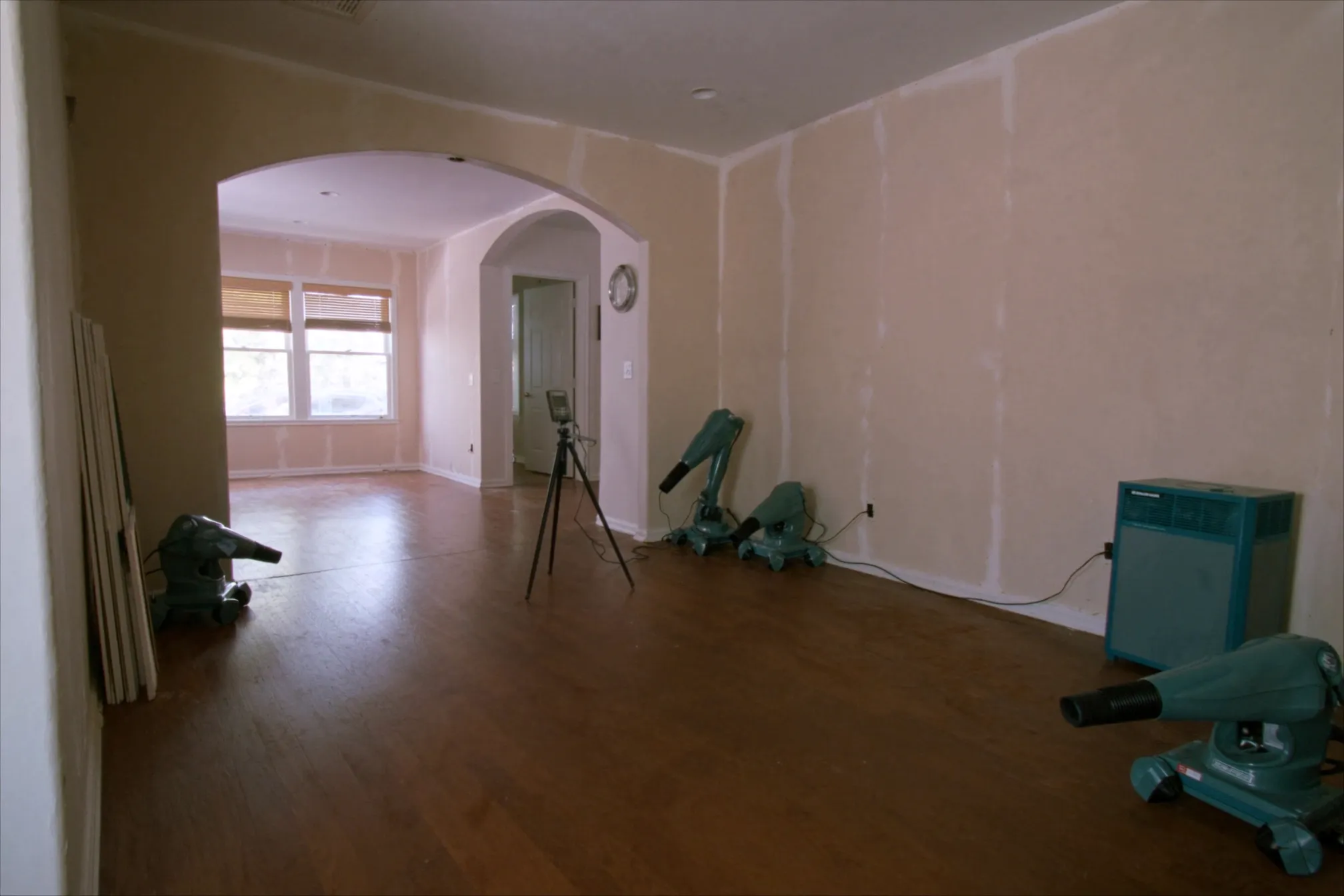
What’s included
- Visual survey of attic, basement & wet rooms
- Moisture mapping with pin & pinless meters
- Thermal imaging for hidden wet cavities
- Humidity & ventilation readings
- Photo-documented written finding
- Lab sampling only when it changes the answer
Mould inspection across Etobicoke, Toronto and the GTA
Most mould calls we get start with a smell, a stain or a home inspector’s note. The questions are always the same: is it mould, how much is there, and why is it growing? A YAREX inspection answers all three from our Etobicoke base, in detached homes, semis and condo suites across Toronto, Mississauga and the rest of the GTA.
We are a restoration and renovation contractor, not a lab. That matters for the answer you get. We inspect the way we remediate: find the water first, because there is no mould problem without a moisture problem, and a finding that does not name the moisture source is not much use.
Where we look, and why
- Attics. Bathroom fans venting into the roof space, blocked soffit vents and warm air leaking up from the house all condense on cold roof sheathing in winter. Dark staining on the underside of the sheathing, frost on nail tips and ice dams at the eaves are the usual signs. See attic mould remediation.
- Basements. Foundation seepage, poor exterior grading, past floods and finished walls built tight against damp concrete. Mould here grows on the back of drywall and panelling, where you cannot see it.
- Bathrooms and kitchens. Undersized or unducted exhaust fans, failed caulking and slow leaks under vanities and sinks.
- Windows and exterior walls. Condensation on cold glass and frames, and water getting in at window flashing or siding details.
How the inspection runs
- Conversation. What you have noticed, when it is worse, and any past leaks, floods or renovations.
- Visual survey. Attic, basement, wet rooms and the exterior grading, gutters and downspouts that feed water toward the house.
- Moisture mapping. Pin and pinless meters on walls, floors and framing, and a thermal camera to find wet cavities behind finished surfaces.
- Air and ventilation readings. Relative humidity by floor, and whether bathroom and kitchen fans actually exhaust outside.
- Written finding. Photos, readings, the likely moisture source and a recommended scope, in plain language you can hand to an insurer, a buyer or a seller.
Mould inspection or mould testing?
People often search for a mould test when what they need is an inspection. A test tells you which spores were in a sample at one moment. An inspection tells you where the mould is, how far it has spread and what water is feeding it, which is what decides the repair. We sample when the result would change the plan, and we say so. For the full comparison, read when mould testing is worth it
Areas we inspect
From Hagersville Ct in Etobicoke we inspect homes and condo suites across Etobicoke, Mississauga, Oakville, Toronto, North York, Scarborough, Vaughan and Markham. Etobicoke and south Mississauga addresses are usually a short drive, which matters when a smell or a stain has you worried before a closing date.
What it costs
The on-site assessment is free. If lab sampling would genuinely change the answer, for a disputed claim, a physician’s request or clearance after remediation, we explain why and price it before anything is sampled. Be wary of free “air tests” that exist mainly to sell a large scope. If we find mould, remediation is quoted separately at a fixed price; see mould remediation for typical ranges.
Why YAREX
Licensed and insured, with inspection, remediation and rebuild under one roof, so the company that finds the problem is accountable for fixing it properly, including the moisture source. Assessments are free. Call +1 343-947-2298 or visit 6 Hagersville Ct, Etobicoke.
Read before you call
- Do You Need Mould Testing? When an Air Sample Is Worth It
- Why Etobicoke Attics Grow Mould, and How Ventilation Fixes It
- Black Mould in the Basement: What to Do in the First 48 Hours
- Is Mould Damage Covered by Home Insurance in Ontario?
Related services
Where we work
Mould Inspection in Etobicoke & Toronto from our Etobicoke base, across Toronto and the GTA: